
Colourful Semantics Colours Explained: Meaning, Chart and How to Use It in Teaching
Colourful Semantics Colours Explained is an innovative teaching approach that transforms how children learn language and communication. It uses a simple yet effective colour-coding system to break down sentences into meaningful parts, helping learners understand grammar and sentence structure more clearly. This method is particularly popular across UK schools and speech therapy sessions because it makes language learning both fun and accessible.
In the UK education system, many teachers and speech therapists have adopted Colourful Semantics Colours Explained to support children who struggle with communication or language delays. By linking colours with words and meanings, the approach encourages children to visualise language in a way that strengthens their comprehension and expressive skills. It is especially helpful for children with additional learning needs, such as autism or speech disorders, providing a bridge between words and understanding.
What Is Colourful Semantics
Colourful Semantics Colours Explained is a structured language approach that was originally developed by speech and language therapists. Its primary goal is to help children build grammatically correct sentences by assigning specific colours to parts of speech. This visual framework makes it easier for learners to identify who is involved, what action is taking place, what object is affected, and where it all happens.
The Colourful Semantics Colours Explained system breaks down complex language concepts into manageable visual cues. Instead of memorising grammar rules, children learn through association. By using bright colours to represent sentence parts, the method creates an engaging learning experience that supports both spoken and written communication. Over time, it encourages independence, creativity, and a deeper understanding of language use.
Understanding Colourful Semantics Colours and Their Meanings
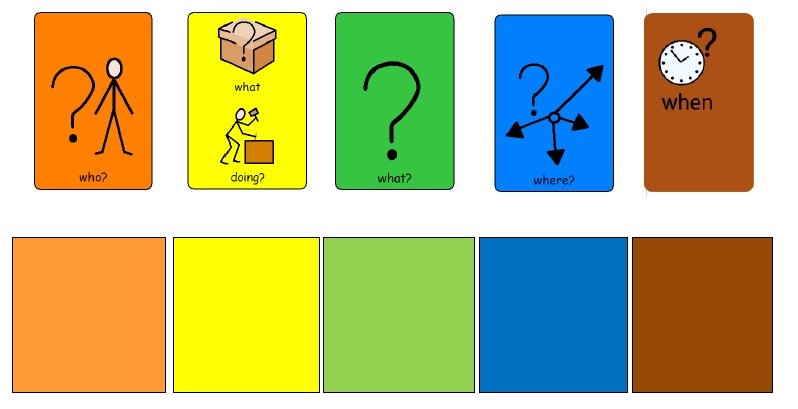
One of the key elements of Colourful Semantics Colours Explained is the use of colours to represent sentence parts. The standard system includes orange for “Who?” (the subject), yellow for “What doing?” (the verb), green for “What?” (the object), blue for “Where?” (the location), and purple for descriptive words such as adjectives. Each colour acts as a visual signal that guides children in constructing meaningful sentences.
When teaching with Colourful Semantics Colours Explained, children learn to match pictures, words, or actions with the correct colour. For example, “The boy (orange) is eating (yellow) an apple (green) in the park (blue).” This approach helps learners visualise sentence structure, making it easier to grasp how words work together. Over time, they begin to internalise grammar patterns and use them naturally in conversation and writing.
Colourful Semantics Chart and Levels Explained

The Colourful Semantics chart is a useful tool that shows the order and purpose of each colour. Teachers and therapists use these charts to guide children through different sentence-building levels, starting from simple two-word sentences and gradually progressing to more complex structures. This step-by-step process builds confidence and ensures that learners understand each stage before moving on.
At each level, Colourful Semantics Colours Explained encourages children to use new sentence components. For example, early levels focus on “Who” and “What doing,” while later levels add “What,” “Where,” and descriptive details. UK educators often use printable charts, flashcards, and interactive activities to help reinforce learning. These tools make lessons more engaging and effective, ensuring that children stay motivated throughout their language journey.
How to Use Colourful Semantics Colours in Teaching
Teachers can easily integrate Colourful Semantics Colours Explained into their lessons by starting with one colour at a time. For example, they might begin with orange cards representing people or characters, then introduce yellow for actions. Once children are confident, more colours are added to build full sentences. This gradual approach allows learners to process information without feeling overwhelmed.
Using Colourful Semantics Colours Explained in the classroom involves creativity and consistency. Flashcards, posters, sentence strips, and digital resources are valuable tools for daily practice. Teachers can also design games or role-play activities that use the colour system to reinforce learning in a playful environment. This approach works equally well in group settings or one-to-one sessions, adapting to each child’s needs and learning style.
Benefits of Using Colourful Semantics in the Classroom
The benefits of Colourful Semantics Colours Explained extend beyond basic sentence construction. It helps children improve their vocabulary, comprehension, and storytelling skills. As they learn to identify sentence parts visually, they also develop better grammar awareness and confidence in communication. This method encourages children to speak in full sentences and express their thoughts more clearly.
Another major advantage of Colourful Semantics Colours Explained is its adaptability. It can be used with children of different ages and learning abilities, making it suitable for both mainstream and special education settings. Research and teacher experiences across the UK show that this system enhances literacy, supports speech therapy goals, and fosters inclusive learning. It builds a strong foundation for lifelong communication skills.
Free and Paid Colourful Semantics Resources in the UK
There are numerous Colourful Semantics resources available in the UK, both free and paid. Websites like Twinkl, Integrated Treatment Services, and Speech and Language Therapy UK offer printable charts, flashcards, and templates. These resources help teachers and parents easily apply the Colourful Semantics Colours Explained system in various educational settings.
For those seeking more tailored materials, paid resource packs often include structured lesson plans, visual aids, and progressive learning levels. However, many schools also create their own Colourful Semantics Colours Explained resources using coloured paper, pictures, or online tools. This flexibility ensures that every teacher can adapt the method to suit their learners and curriculum goals effectively.
Common Mistakes to Avoid When Using Colourful Semantics
While Colourful Semantics Colours Explained is straightforward, consistency is key. A common mistake is changing colours or meanings between sessions, which can confuse children. Teachers should always stick to the standard colour system to ensure continuity and understanding. Keeping resources clear, simple, and visually appealing also enhances the learning process.
Another mistake is rushing through levels too quickly. Colourful Semantics Colours Explained is most effective when children master each step before progressing. Giving learners time to explore, practise, and apply their understanding helps them build strong communication habits. With patience and consistency, this approach delivers lasting improvements in both speech and writing.
Conclusion
Colourful Semantics Colours Explained is a powerful, visual, and inclusive tool for teaching language and communication. Its colour-coded structure transforms the way children understand grammar and sentence building, making learning both interactive and enjoyable. Teachers, parents, and therapists across the UK continue to use this approach to support children of all abilities.
By combining structure, creativity, and accessibility, Colourful Semantics Colours Explained helps learners find their voice. It encourages confidence, independence, and a love for language that extends far beyond the classroom. Whether in schools or therapy sessions, this colourful approach continues to make a lasting difference in children’s communication skills.
Frequently Asked Questions
What are Colourful Semantics colours and what do they represent?
Each colour represents a part of a sentence like who, what doing, what, where, and describe.
Why is Colourful Semantics used in UK schools and speech therapy?
It helps children understand grammar, build sentences, and improve communication skills.
Can Colourful Semantics Colours Explained help children with autism or speech delays?
Yes, it supports children with language difficulties through visual learning.
Where can teachers find Colourful Semantics resources in the UK?
Resources are available on Twinkl, Integrated Treatment Services, and other UK education sites.
You May Also Read: Dennis Eagle Vehicle Range – Innovation and Quality