
Whats A Trauma Bond? Definition, Signs & How to Break Free
Whats A Trauma Bond? It’s a question many people quietly ask when they feel trapped in a relationship that brings more pain than joy. A trauma bond is not love, though it often feels like it. Instead, it is an unhealthy attachment formed through cycles of manipulation, control, and moments of kindness that keep victims emotionally hooked.
Understanding Whats A Trauma Bond? is vital because this psychological trap can keep people stuck for years. Trauma bonds are not limited to romantic relationships – they can happen in families, friendships, or even workplaces. Recognising the signs and learning how to break free is the first step towards reclaiming independence and healing.
What’s a Trauma Bond? – Definition and Psychology
So, Whats A Trauma Bond? It is an emotional and psychological tie between a victim and an abuser. Unlike healthy relationships, which are based on mutual respect, a trauma bond thrives on control, fear, and dependency. Victims often cling to brief moments of kindness, ignoring the broader cycle of harm.
Psychologists explain Whats A Trauma Bond? by pointing to intermittent reinforcement. Abusers alternate between cruelty and affection, creating a confusing push-and-pull dynamic. The victim becomes attached not because of love, but because of the unpredictability, which tricks the brain into believing things will improve. This cycle forms the heart of trauma bonding.
How Trauma Bonds Form in Relationships
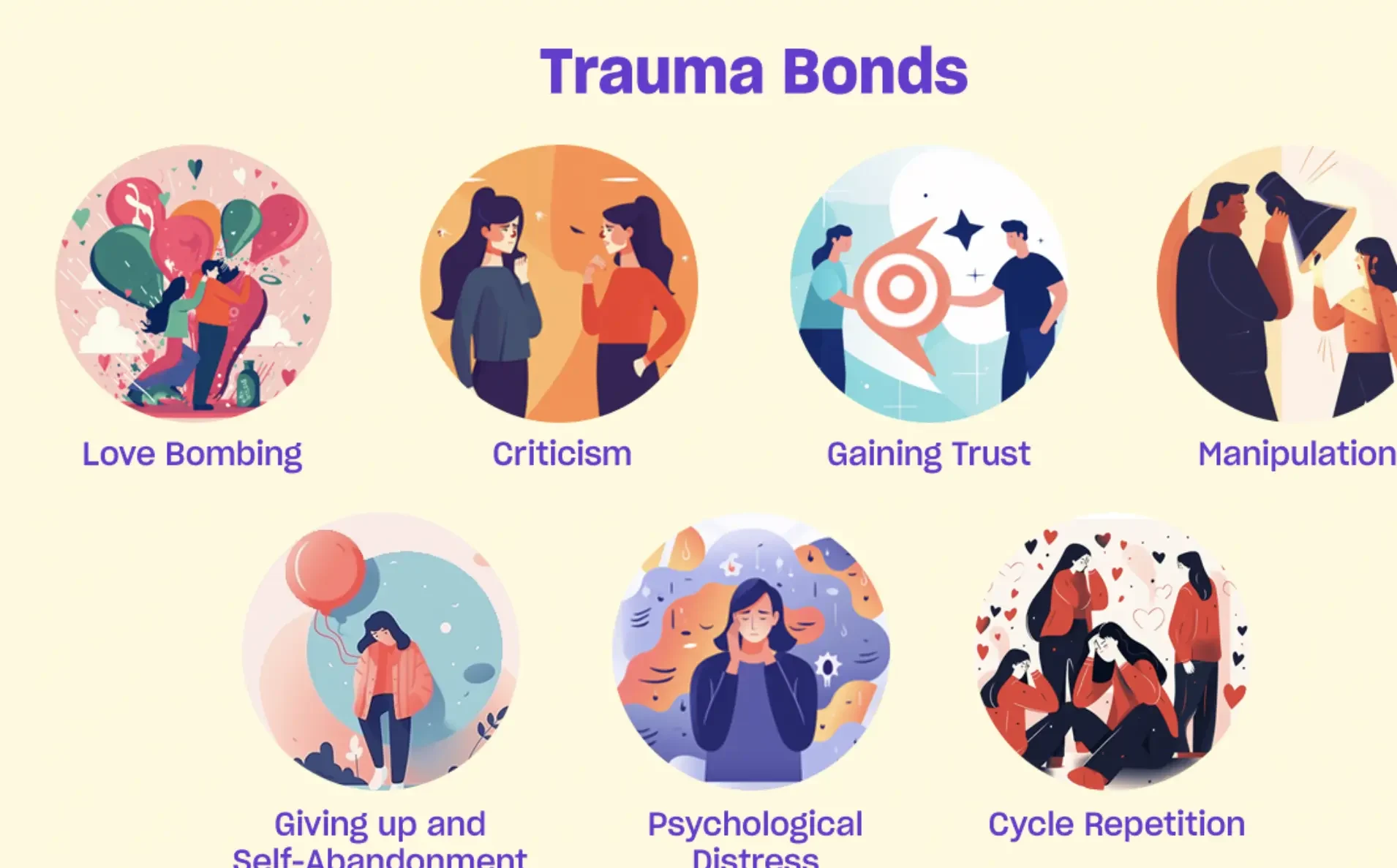
When asking Whats A Trauma Bond relationship, the answer lies in how it develops. At the beginning, abusers may appear loving and supportive. Over time, criticism, manipulation, or even violence begins. Yet these harmful actions are often followed by apologies or affectionate gestures, leaving the victim clinging to the hope of change.
This cycle keeps victims emotionally hooked. Whats A Trauma Bond? It is essentially an addiction to the relationship’s highs and lows. The unpredictability creates dependency, where the victim feels unable to survive without the abuser. Fear, guilt, and misplaced loyalty strengthen this attachment, making escape feel almost impossible.
Common Signs of a Trauma Bond

Recognising Whats A Trauma Bond? begins with spotting the signs. One major indicator is feeling unable to leave despite knowing the relationship is harmful. Victims may justify or excuse abusive behaviour, convincing themselves it is temporary or even their fault. This self-blame deepens the bond.
Another sign of Whats A Trauma Bond? is emotional addiction. The victim becomes hooked on the cycle of tension and relief. Confusion also plays a big part – many believe they are experiencing love when in reality, they are stuck in a pattern of control. These are the red flags of trauma bonding.
The Impact of Trauma Bonding on Mental Health
Whats A Trauma Bond? It is more than just a toxic relationship – it leaves lasting scars on mental health. Victims often suffer from anxiety, depression, and exhaustion caused by constant emotional swings. Their confidence erodes, and many start to believe they deserve the mistreatment they receive.
The effects don’t end when the relationship does. Survivors may struggle to trust others, fearing the same patterns will repeat. Trauma bonding can distort the way a person views love and safety, carrying forward into new relationships. This is why breaking Whats A Trauma Bond? is so crucial for long-term healing.
How to Break Free from a Trauma Bond
The first step in escaping is understanding Whats A Trauma Bond? Once a victim realises the relationship is toxic, they can begin to take back control. Acknowledging that the attachment is built on abuse rather than love is a powerful and liberating moment.
Breaking free often requires outside support. Therapy, counselling, or trusted friends can provide strength and perspective. Survivors must learn to set boundaries, create distance, and rebuild their self-worth. Every step away from the bond is a step towards freedom. Recognising Whats A Trauma Bond? is the key to breaking it.
Healing and Recovery After a Trauma Bond
Recovery does not happen overnight. Healing after Whats A Trauma Bond? involves relearning what safe and respectful love feels like. Many survivors benefit from therapy and support groups, where they find encouragement and guidance from others who have faced similar struggles.
Practical self-care is also essential. Activities like journaling, mindfulness, and exercise help survivors reconnect with themselves. Over time, these practices rebuild confidence and foster independence. Whats A Trauma Bond? It may feel unbreakable at first, but with persistence and support, survivors can reclaim their lives and rediscover hope.
Conclusion
So, Whats A Trauma Bond? It is a dangerous emotional tie that binds victims to abusers through cycles of pain and reward. This unhealthy bond is not love, but a trap that feeds on confusion, dependency, and fear. Recognising it, seeking support, and taking steps towards recovery are essential for freedom. Healing is possible, and every survivor deserves a life free from manipulation.
FAQs
Whats a trauma bond in simple terms?
It is an unhealthy attachment between a victim and an abuser, fuelled by fear and control.
Whats a trauma bond relationship and how is it different from love?
A trauma bond relationship is based on manipulation and abuse, while love is rooted in respect, safety, and mutual care.
Can a trauma bond turn into a healthy relationship?
No, trauma bonds cannot transform into healthy love without breaking the cycle of abuse completely.
How do I know if I’m trauma bonded?
Signs include emotional dependency, excusing abuse, and struggling to leave even when suffering harm.
What are the first steps to break a trauma bond?
Recognising Whats A Trauma Bond?, seeking therapy, setting boundaries, and building support networks are the first steps.
You May Also Read: Best Commercial Real Estate Asset Management Software in the UK